


Busy Weeks Ahead as End of Season Approaches
With the scientists and several crew members having returned home, the attention of the remaining thirteen team members at the station turns to the many tasks they must complete before the end of the season. The next couple of weeks will be packed!
With the scientists and several crew members having returned home, the attention of the remaining thirteen team members at the station turns to the many tasks they must complete before the end of the season. The next couple of weeks will be packed!
The ship has arrived
After spending several difficult days navigating through the heavy sea ice, pushed by recent strong winds, the cargo ship finally arrived this week at the Princess Ragnhild Coast.
The team at the coast - Alain, Tim, Tom, Yann and Jacques - were relieved to be able to unload the equipment from the ship after several days of delay.
Seasoned professionals with years of experience, the IPF team unloaded all of the cargo from the ship within five hours. They then loaded onto the ship Dr. Sarah Wauthy’s snow samples for the PASPARTOUT project, which are destined for Belgium.
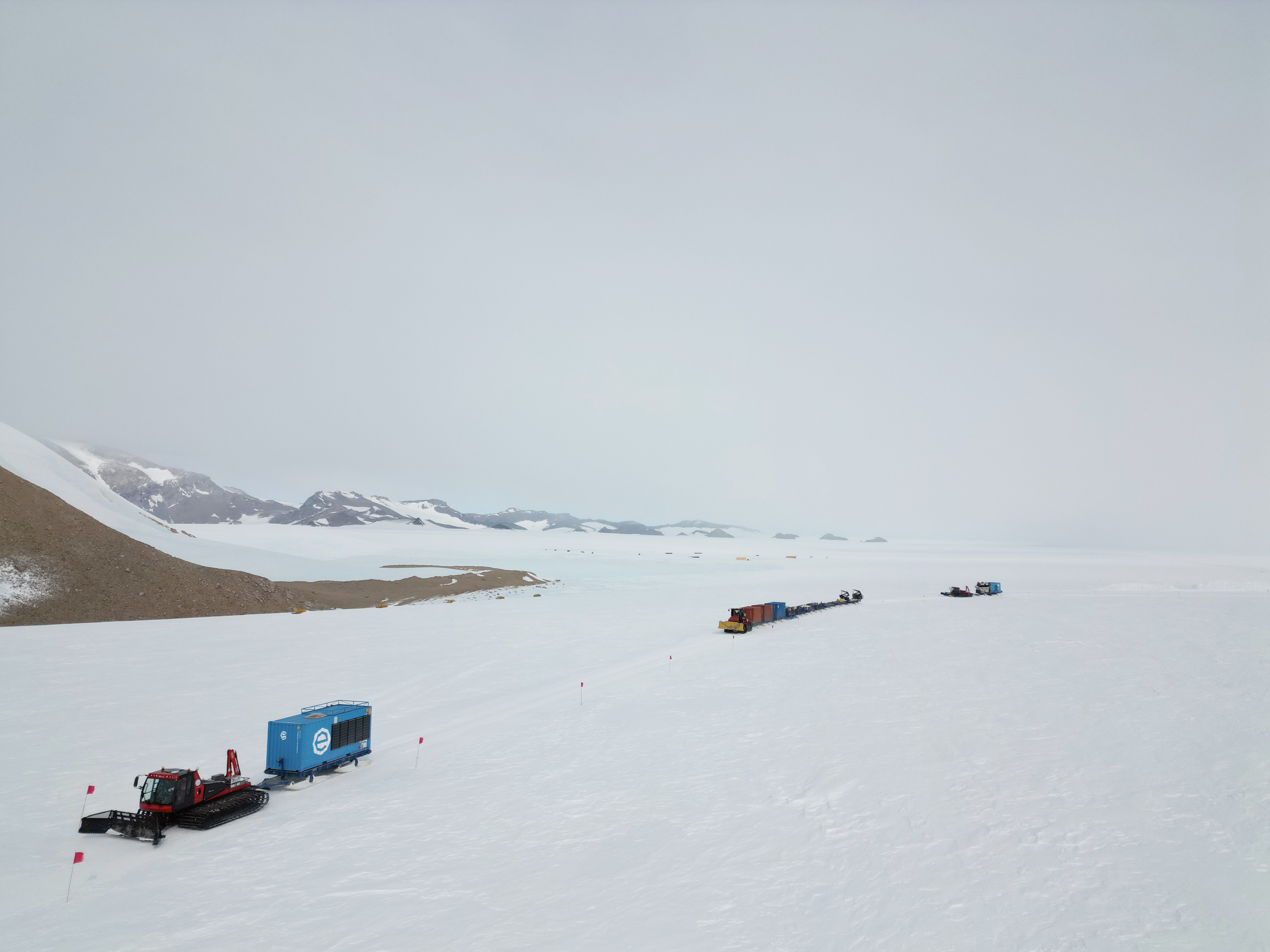
After ensuring that all the cargo was securely loaded onto the Lehmann sledges, they began the long 240km traverse to head back to the Princess Elisabeth Antarctica. The journey takes about two days because the heavy Prinoth tractors that pull the sledges with the cargo have a top speed of 10 km an hour when they are loaded. The traverse team takes turns driving but they must still take breaks to eat and rest along the way back to the station.
Important cargo
Included in the newly arrived cargo are 192 lead-acid batteries that will replace the batteries at the station, which have reached the end of their functional life and will be recycled. Once the team at the coast arrives at the station, it will be several days’ work to disconnect all of the old batteries, connect all of the new batteries, and prepare them for their first charge and overwintering.
Lead-acid batteries are easily recycled. They are also more resistant to cold temperatures than any other type of battery, which is the reason why they were chosen to store energy produced by the solar panels and wind turbines at the Princess Elisabeth Antarctica. The fact that they can be easily recycled is also a key part of reducing the environmental footprint of the station.
Besides all the usual station supplies, spare parts for the vehicles, grid components for the solar panels and building material, the cargo also includes a good quantity of frozen food (meat, fish and vegetables) for the rest of the season and future expeditions.
The ship will also deliver one heavy duty metal beam that will be used to reinforce the floor of the south annex where the station’s heavy water treatment system and snow melter are located. The underlying wooden beam is showing some signs of stress, so the metal reinforcement should alleviate this issue.
There’s always a lot to do at the station
While the team of five were at the coast, the remaining members of the BELARE team who stayed behind at the station kept busy with science support and various projects.
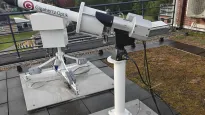
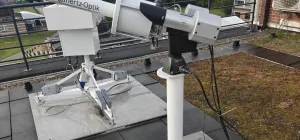
Even though that the scientists have left, the IPF staff is still working on installing and maintening several instruments for the PASPARTOUT project. The TEOM, a Continuous Ambient Particulate Monitor sensor that makes direct mass measurements of particulate matter using a tapered element oscillating microbalance (TEOM) is being reinstalled. An Optical Particle Sizer will also be installed in the south scientific shelter to measure the size of atmospheric particles, while the Brewer ozone spectrophotometer will be customised and prepared for spending its first operational winter on the station's roof. This will be useful to compare data of the ozone layer in conjunction with the PANDORA, which was installed a couple of weeks ago for the ROMA project.
For the AWDA project, the team has been trying several settings on the Very Low Frequency (VLF) mobile antenna used to determine a suitable replacement location for the new system that will replace the one that has been operating for many years on the glacier near the tip of Utsteinen Ridge. The project monitors whistler waves (a type of electromagnetic wave that propagates from one hemisphere to another in Earth’s protective magnetosphere), in order to model the behaviour of the plasmasphere in Earth’s atmosphere.
Besides all the work they've been doing to support the work scientists, the carpenters have been busy building a new storage area in the garage in the wouth annex with wooden shelves and a mezzanine to maximize space for all Ski-Doo parts in the garage.
When the team from the coast returns, it will be all hands on deck to replace the 192 batteries (or as many as possible) and prepare the station for its transition to winter mode, which will happen when the team departs on February 12th (give or take a few days depending on the weather), marking the conclusion of the 2025-2026 BELARE season.
Download