


Newly Published Research from Baillet Latour Antarctica Fellow Sheds Light on Natural Carbon Capture in East Antarctica
The International Polar Foundation is delighted to share an exciting update from 2018 Baillet Latour Antarctica Fellow Dr. Kate Winter of Northumbria University, whose fieldwork around the Princess Elisabeth Antarctica contributed to a major peer-reviewed publication on carbon capture in East Antarctica.
The International Polar Foundation is delighted to share an exciting update from 2018 Baillet Latour Antarctica Fellow Dr. Kate Winter of Northumbria University, whose fieldwork around the Princess Elisabeth Antarctica contributed to a major peer-reviewed publication on carbon capture in East Antarctica.
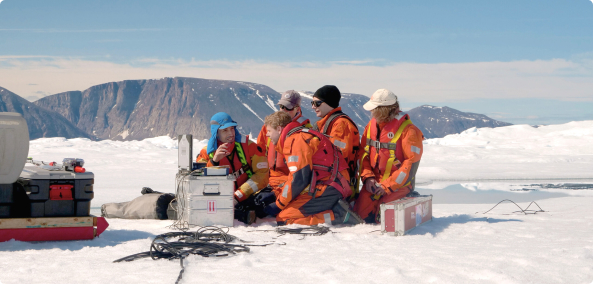
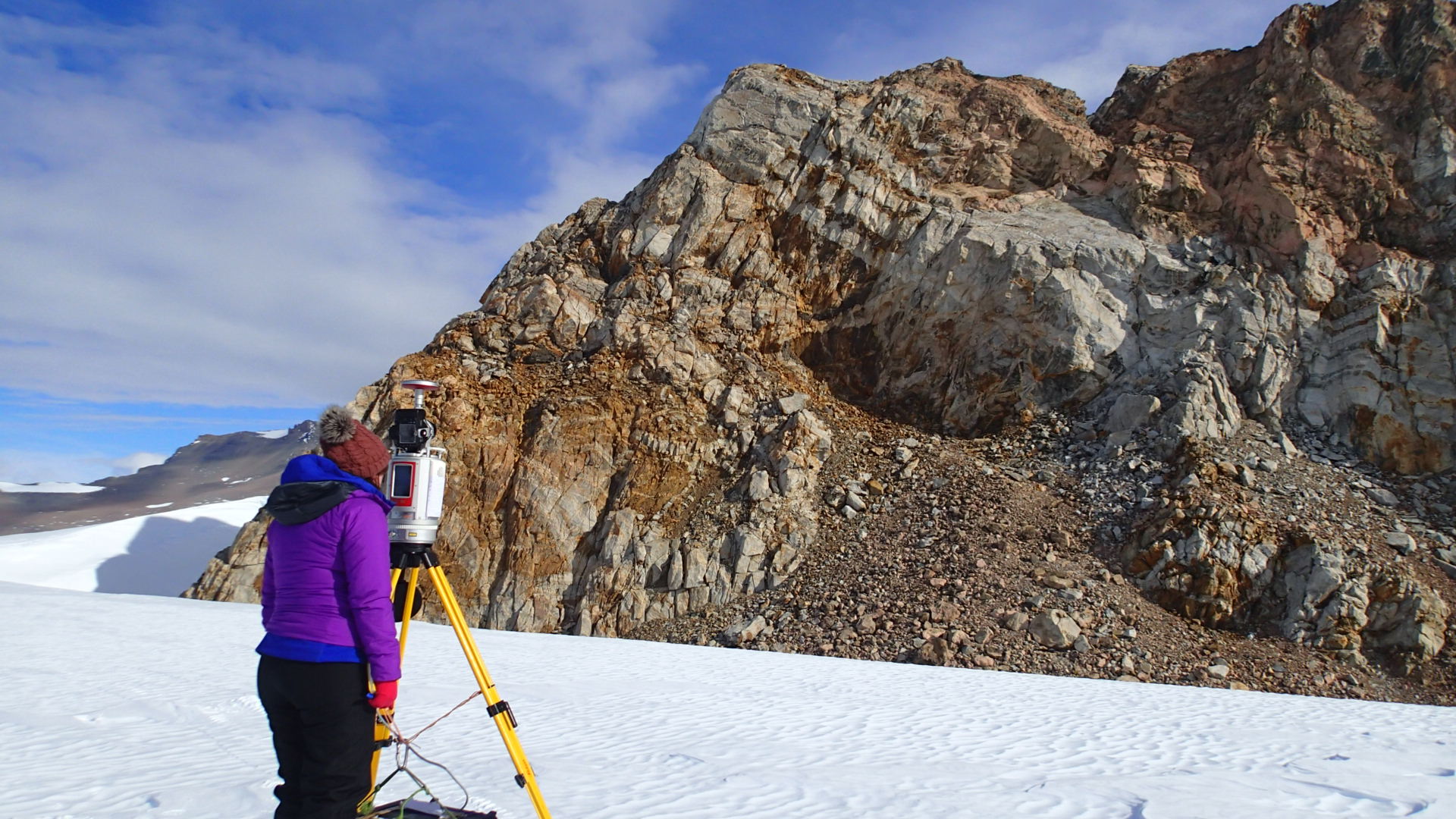
Working with an international team of oceanographers, geochemists and glaciologists, Dr. Kate Winter published new findings that reveal an unexpected natural process in East Antarctica which may help regulate atmospheric carbon dioxide over long timescales. The study, now available in Nature Communications, draws directly on sediment analyses and field observations gathered in and around the Sør Rondane Mountains, the region where Dr. Winter conducted her Fellowship-supported research during the 2018-19 and 2019-20 BELgian Antarctic Research Expeditions (BELARE).
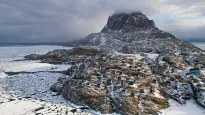
The research team reports that the Antarctic nunataks contain weathered rock with exceptionally high levels of bioavailable iron. These iron-rich sediments are gradually delivered to the ocean through the flow of glaciers and the calving of icebergs. Once the sediments reach the Southern Ocean, the iron they contain supports the growth of phytoplankton, which are primary producers in the Antarctic marine food web. Iron plays a fundamental biological role, as it is a central atom in the chlorophyll molecule. Through chlorophyll, plants on land and microscopic phytoplankton in the ocean are able to capture atmospheric carbon dioxide, store the carbon, and release oxygen through photosynthesis. This is why the health of the ocean, including its temperature, chemical balance and physical stability, is so crucial. More than half of the oxygen present in our atmosphere is produced by marine phytoplankton, underlining the global importance of these microscopic organisms and the nutrient cycles that sustain them.
“Our analyses show that these exposed rock surfaces produce far more accessible iron than many other areas of the continent,” said Dr. Winter. “Even in an extremely cold environment, dark rock absorbs enough summer sunlight to drive weathering. The resulting iron-rich material becomes an important nutrient source once it reaches the ocean.”
Although this natural delivery of nutrients to the ocean has been active for millions of years, the researchers note that changes in ice sheet dynamics, including thinning glaciers and the exposure of additional mountain surfaces, may influence how much iron is transported to the Southern Ocean in the future.
Satellite data already show recurring phytoplankton blooms near glacial outlets close to the study area, highlighting how vital these nutrient pathways are for marine ecosystems. The publication suggests that, as the Antarctic climate evolves, these natural iron “factories” may have an even greater impact on ocean productivity, albeit with a significant time delay: iron-rich sediments can take tens of thousands of years to travel from mountain slopes to the coast.
Dr. Winter’s research builds on the work she began during her Baillet Latour Antarctica Fellowship, a program established by the Baillet Latour Fund and the International Polar Foundation to support early-career scientists conduct original research at or near Princess Elisabeth Antarctica, which ran from 2008 until 2020.
By linking mountain geology, ice-sheet dynamics and marine biochemical processes, this new study offers valuable insight into how Antarctica interacts with the ecosystem and the global carbon cycle. It also highlights the importance of continued fieldwork at Princess Elisabeth Antarctica, where multidisciplinary science helps to piece together the continent’s complex environmental processes.
Further information about Dr. Winter’s research can be found via the Northumbria University Research Portal and on the IPF website (Baillet Latour Antarctica Fellowship, BioFe research project 2018-19, BioFe research project 2019-20, Findings with Raspberry Shake 3D seismographs)!
The full scientific paper, Thinning Antarctic glaciers expose high-altitude nunataks delivering more bioavailable iron to the Southern Ocean, is available in Nature Communications.
Download