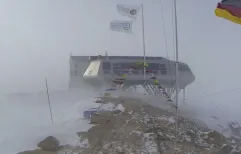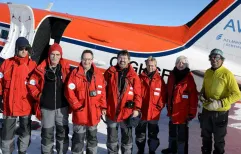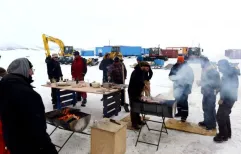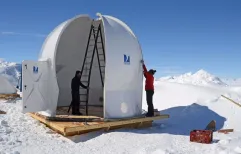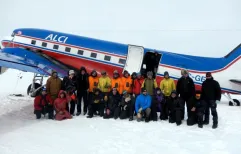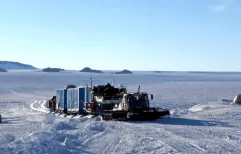
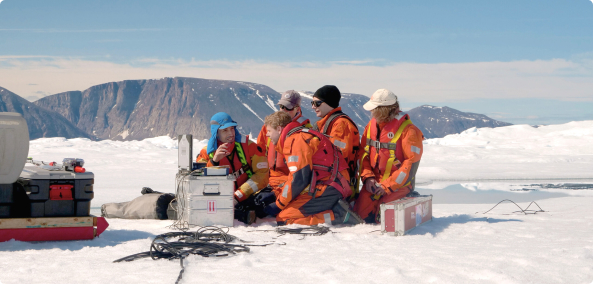
"We got treated with warm croissants for breakfast this Sunday. Apart from that, it was nothing like a normal Sunday here at Princess Elisabeth," recounted veteran Belgian reporter Jos van Hemelrijck. Staff members and scientists are working hard to prepare the first field trips of the season.
Scientists arrive at station as season enters full swing
The 2014-15 season is in full swing now that the first batch of scientists have finally arrived. The new arrivals get acquainted with life at the station and go for crevasse training.
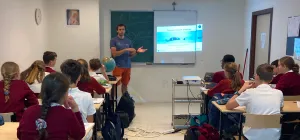
Several scientists, a teacher, a veteran Belgian journalist, a field guide, and the team’s doctor will arrive in Antarctica in a few days, more than doubling the number of people at the station.
Brussels’ premier Arctic discussion forum returns for fifth time
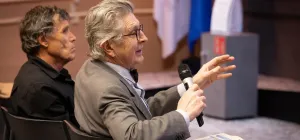
With 49 speakers and moderators taking part this year, more than 200 participants attended the fifth edition of the International Polar Foundation's annual Arctic Futures Symposium.
Once again, Arctic stakeholders and high-profile policymakers will gather in Brussels on the 14th and 15th of October for the 5th edition of the Arctic Futures Symposium. Held at the Residence Palace in the European Quarter of Brussels, the 2014 symposium will focus on "The Arctic, its peoples, and its economies".
Antarctica – The Next Generation: Conference Registration Now Open
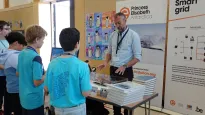
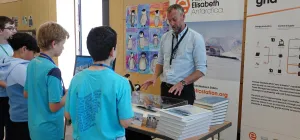
On September 17, the "Antarctica – The Next Generation" conference will take place in Brussels, Belgium. It will present scientific research projects carried out at Princess Elisabeth Antarctica. The winner of the €150.000 InBev-Baillet Latour Antarctica Fellowship, awarded to young polar scientists, will also be announced.
Scientific Field Expeditions Begin as the BELARE Team Welcomes 2026
Last week as the BELARE team rang in 2026, the PASPARTOUT project began its field campaign for this season, the ROMA and SnowFlux projects continued setting up instruments in the vicinity of the Princess Elisabeth Antarctica. Soon Alain Hubert and Tim Grosrenaud will start their reconnaissance missions at the coast accompanied by Simon Steffen heading back out to work on instruments for the PEACE and NISAR projects.
New Team Members and Scientists Arrive in Time for Christmas
On December 19th, new crew members and scientists arrived at PEA to start their mission in Antarctica. Since their arrival, they’ve been doing mandatory safety training and preparing for their field missions.
Perseus Ready for Arrival: Runway Preparations, New Infrastructure, and Ongoing Science
As the Perseus International Airfield opens for incoming team mebers and scientists, operations at Princess Elisabeth Antarctica move full steam ahead for logistics, infrastructure, and science.
Newly Published Research from Baillet Latour Antarctica Fellow Sheds Light on Natural Carbon Capture in East Antarctica
The International Polar Foundation is delighted to share an exciting update from 2018 Baillet Latour Antarctica Fellow Dr. Kate Winter of Northumbria University, whose fieldwork around the Princess Elisabeth Antarctica contributed to a major peer-reviewed publication on carbon capture in East Antarctica.
Busy Week for Our Team Includes Fieldwork and Preparing Perseus International Airfield
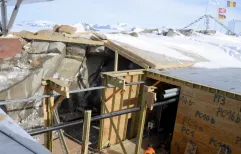
The last week the BELARE team has been busy preparing the three-kilometre long runway at Perseus International Airfield, going on field expeditions, and working on station upgrades.
This week at Princess Elisabeth Antarctica Station (PEA), the team continued making important adjustments to the station while pushing forward with several scientific support missions across the region.
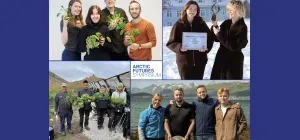
Marine Ecosystem Restoration Startup from Tromsø Wins 4th Laurence Trân Arctic Futures Award at Arctic Futures Symposium 2025
The International Polar Foundation and the Trân Family are proud to announce the fourth winner of the annual Laurence Trân Arctic Futures Award: Marine Spark X from Tromsø, Norway.
Leveling Up: A Busy Week at Princess Elisabeth Antarctica
After settling in at the Princess Elisabeth Antarctica (PEA), the team has fully reactivated all the station’s systems. Now that everyone has settled in, the real work begins: maintaining the station and supporting this season’s scientific research projects.