


Hard at Work in Support of Science
This week at Princess Elisabeth Antarctica Station (PEA), the team continued making important adjustments to the station while pushing forward with several scientific support missions across the region.
This week at Princess Elisabeth Antarctica Station (PEA), the team continued making important adjustments to the station while pushing forward with several scientific support missions across the region.
After successfully leveling the station last week, annual maintenance at PEA carried on. The team continued work on the new leveling system, which will make future adjustments to the station faster and easier. With relatively calm weather over the past few days, conditions were also ideal to do annual maintenance on the station’s nine wind turbines.
Another major task this week has been replacing the old solar thermal panels that have faithfully heated water at PEA since it was first completed in 2009 with new units. These 2.2 x 1.2 metre panels had been shipped to Antarctica by container ship to be ready for installation this season.
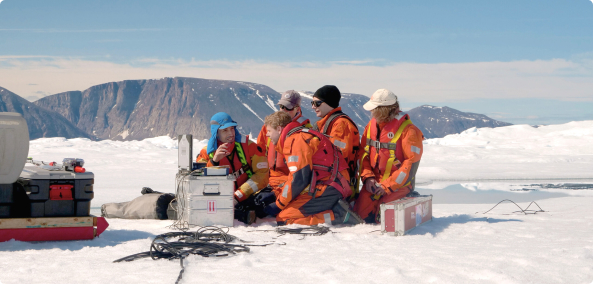
Out on the Antarctic Plateau, Henri Robert and Nicolas Herinckx carried out GPS measurements for the BELSPO-funded FROID project. Their goal was to measure specific points recorded last year in order to track subtle ice movements in the region’s blue ice areas. Guided by bamboo sticks marking previous measurement sites, they navigated through shifting snow conditions, enjoying a calm and sunny first day before facing wind, snowfall, and near-whiteout conditions the next. The data collected this season will help determine optimal locations for next year’s planned 200-metre ice core drilling, part of an effort to find some of the oldest ice accessible without drilling kilometres into the ice sheet.
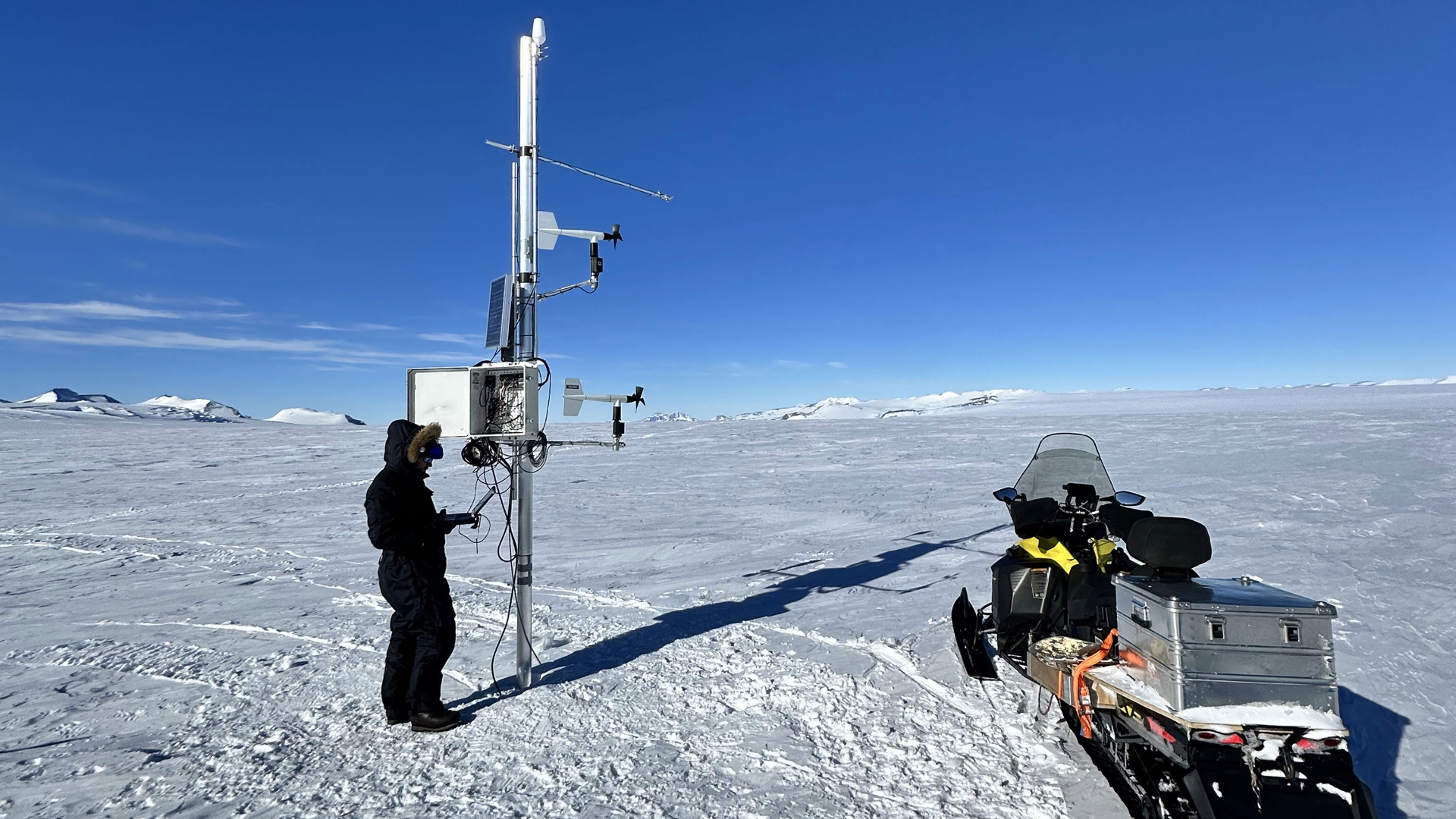
Earlier in the week, Nicolas Herinckx and Simon Steffen travelled to Vesthaugen Nunatak to perform necessary maintenance on the automatic weather station (AWS) installed last season for the PEACE project. They continued on to Seal Rock Nunatak (near the former Japanese ASUKA Station) to service the GNSS antenna for the GIANT project and troubleshoot an issue with the battery enclosure. Data collected during the winter season was downloaded and a reset brought the system back online. This highlights challenges one faces in long-term autonomous data in Antarctica’s extreme conditions.
Later this week, Simon and Nicolas will set out toward the coast for a 600-kilometre round trip by snowmobile as part of the PEACE project. Their mission includes maintaining and downloading data from AWS KNG and AWS RBI. The plan is to cover 250 kilometres on the first day, reach AWS KNG, and spend the night in a tent before continuing 40 kilometres the next morning to AWS RBI. One pressure sensor will need replacement, and depending on snow accumulation, the team may need to raise parts of the stations. This is always a challenging task, especially with just two people, but Simon and Nico will get the job done. If conditions allow, they will then make the long 300-kilometre return to PEA the same day. With temperatures at a not too cold –7 to –8°C and warmer, clement weather expected near the coast, conditions look promising for safe travel.
In the coming weeks, the team will focus on preparing the runway at Perseus Airfield. This work is essential to ensure the next incoming group of scientists and staff can land safely on the smooth, groomed blue ice surface on December 20th.
Don’t forget to check out our social media to see photos and videos of our team hard at work!
Download