


Leveling Up: A Busy Week at Princess Elisabeth Antarctica
After settling in at the Princess Elisabeth Antarctica (PEA), the team has fully reactivated all the station’s systems. Now the bigger projects begin: maintaining the station and supporting this season’s scientific research projects.
After settling in at the Princess Elisabeth Antarctica (PEA), the team has fully reactivated all the station’s systems. Now the bigger projects begin: maintaining the station and supporting this season’s scientific research projects.
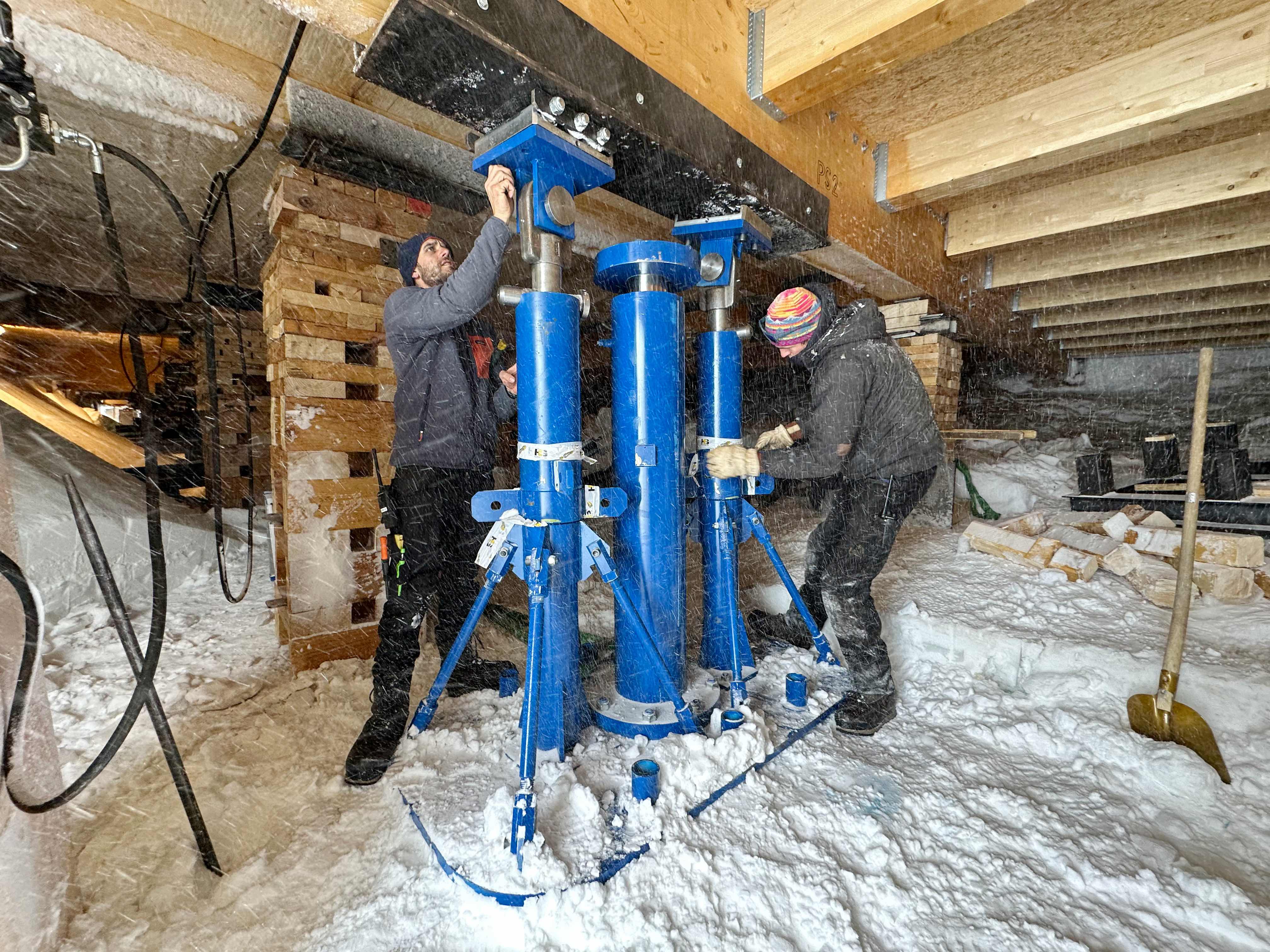
After a full week of getting the station and all its systems back up and running at full capacity, it’s time for other major tasks to be initiated. One of the big undertakings each season is leveling the station’s annexes. This must be done at the beginning and end of each season to ensure that the building stays level since it rests on a continuous moving surface, the ice sheet.
The main body of Princess Elisabeth Station is anchored into the granite ridge at Utsteinen Nunatak, but the annexes sit directly on a glacier and therefore move (creep) with the glacier’s natural flow towards the coast. At this location the glacier moves 10-15 cm on average each year, so, using a laser level, the team raises the annexes 6-8 cm at the start of the season and about the same at the end of the season. This year the team will be testing new hydraulic jack systems, outfitted with robust pistons to raise the station and level it to the millimeter. Stay tuned to see how this work progresses!
This adaptability is quite unique, since we are one of only a few stations in Antarctica that use this precise leveling technique, allowing us to be flexible and adjust to the constantly flowing ice beneath the station. Other Antarctic stations using some form of hydraulic jack system to level their stations and stay above the snowpack are the German (Neumayer Station) and UK’s (Halley) stations.
Excellent science support
The team not only focuses on the station’s infrastructure; it must also start work on the various scientific projects that are planned.
Last year, the BELARE team successfully produced hydrogen at the Princess Elisabeth Antarctica for the very first time. This season, the system is again being used to fill weather balloons for the ACME project, which conducts atmospheric radio soundings. These weather balloons measure the vertical variation of temperature, pressure, wind, and humidity throughout the troposphere and into the stratosphere collecting and transmitting data, creating a 25-30 km profile of the atmosphere. For the time being, hydrogen production at PEA is still relatively small, however it meets the needs of the ACME project and replaces our dependency on helium which is a finite natural resource and increasingly difficult to source. The on-site hydrogen production has been a successful pilot project and in the future we are looking at the possibility of scaling up this endeavor to possibly run our back up generators on hydrogen, which kick in during times when available wind and solar energy is severely limited, which thankfully almost never happens.
Another project our team supported this week is the Belspo-funded PASPARTOUT project, which focuses on atmospheric dynamics, clouds, and aerosols in Antarctica. Our staff installed a Brewer spectrophotometer to observe the amount of UV radiations and the health of the ozone layer, which is usually very thin during the austral spring above Antarctica and is often referred to as the ‘ozone hole’. During the winter the polar vortex traps cold air and leads to extremely low temperatures, which causes polar stratospheric clouds to form. In the spring, a chemical reaction takes place high above the Earth's surface which can have serious consequences for life on the ground.
Although the Montreal protocol is a symbol of international cooperation (signed in 1989) to limit the production and use of chlorofluorocarbons (CFC’s); they are still present in our atmosphere since they have a half life of 50-500 years depending on the molecule. When CFC’s rise to the stratosphere ultraviolet radiation (UV) breaks them down and in the process create chlorine and bromine atoms, which are capable of destroying tens of thousands of ozone molecules. The depleted ozone layer then allows far more UV radiation to pass through the atmosphere and can be harmful to humans and other forms of life on the surface. This is of course why sunscreen and adequate skin protection is extremely important as you are exposed to far higher rates of UV radiation here than in other parts of the planet.
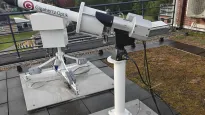
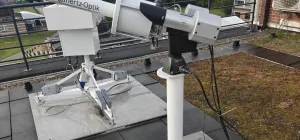
Another Belspo-funded project that got up and running this past week was the ROMA project. The primary instrument is the Cimel photometer, which actively tracks the sun throughout the day and takes high precision measurements for the retrieval of essential physico-optical parameters: Aerosol Optical Depth (AOD), Volume Size Distribution (VSD), complex refractive index (n), shape factor and water vapor content present in the lower atmosphere. The instrument was successfully configured and installed on the roof of PEA and will now autonomously collect data throughout the season.
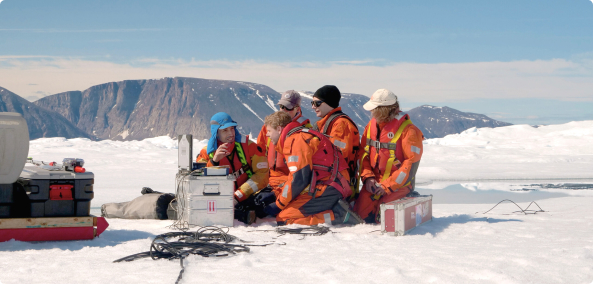
Simon Steffen and Nico Herinckx visited the two automatic weather stations (AWS) located on the Antarctic plateau which are the two southernmost stations in the transect. All the stations are outfitted with an iridium antenna and SBD modem to transmit their data via satellite throughout the year allowing our team to monitor the data and check which instruments are faulty and need replacing. The one station close to the Gunnerstadt glacier needed its pressure sensor replaced as well as one temperature and humidity sensor. The station furthest to the south at 2,450 meters elevation (which we call PUP for Plateau Upper) had one wind anemometer not recording wind speed and our team simply was able to replace the propeller and the instrument once again was properly working and recording accurate data. Most stations have two of each instrument, in case one fails we are still able to record that meteorological parameter throughout the year.
Simon and Nico also plan to visit the Seal Rock nunatak (near the former Japanese ASUKA Station) in the coming days to download the data and insert a new memory card for the GIANT project, which is monitoring seismic activity in the Queen Maud Land region of East Antarctica and can very accurately deduce the Surface Mass Balance (SMB) of the area. After swapping the memory cards they will be able to retrieve and send all data back to the scientists responsible for the project at the University of Luxembourg. The rest of the team is busy as always with the necessary maintenance and repairs on the numerous systems at the station and preparing equipment for the arrival of additional scientists.
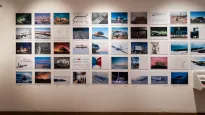
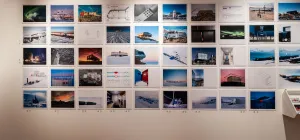
Stay tuned as we will continue to keep you informed as to what our team is up to in Antarctica as this BELARE campaign enters full swing - and don’t forget to check out the photo gallery on our website as well as our social media channels for some amazing photos and videos from Antarctica!
Download