


PEACE - ACME
The Air Column Moisture Evaluation (ACME) project is one of the Princess Elisabeth Antarctica Climate Experiments (PEACE) and has been running since 2012. It is carried out by the International Polar Foundation (IPF) in partnership with the Royal Meteorological Institute of Belgium (RMI/IRM/KMI), building on a collaboration initiated with the late Professor Konrad Steffen of the Swiss Federal Institute for Forest, Snow and Landscape Research (WSL).
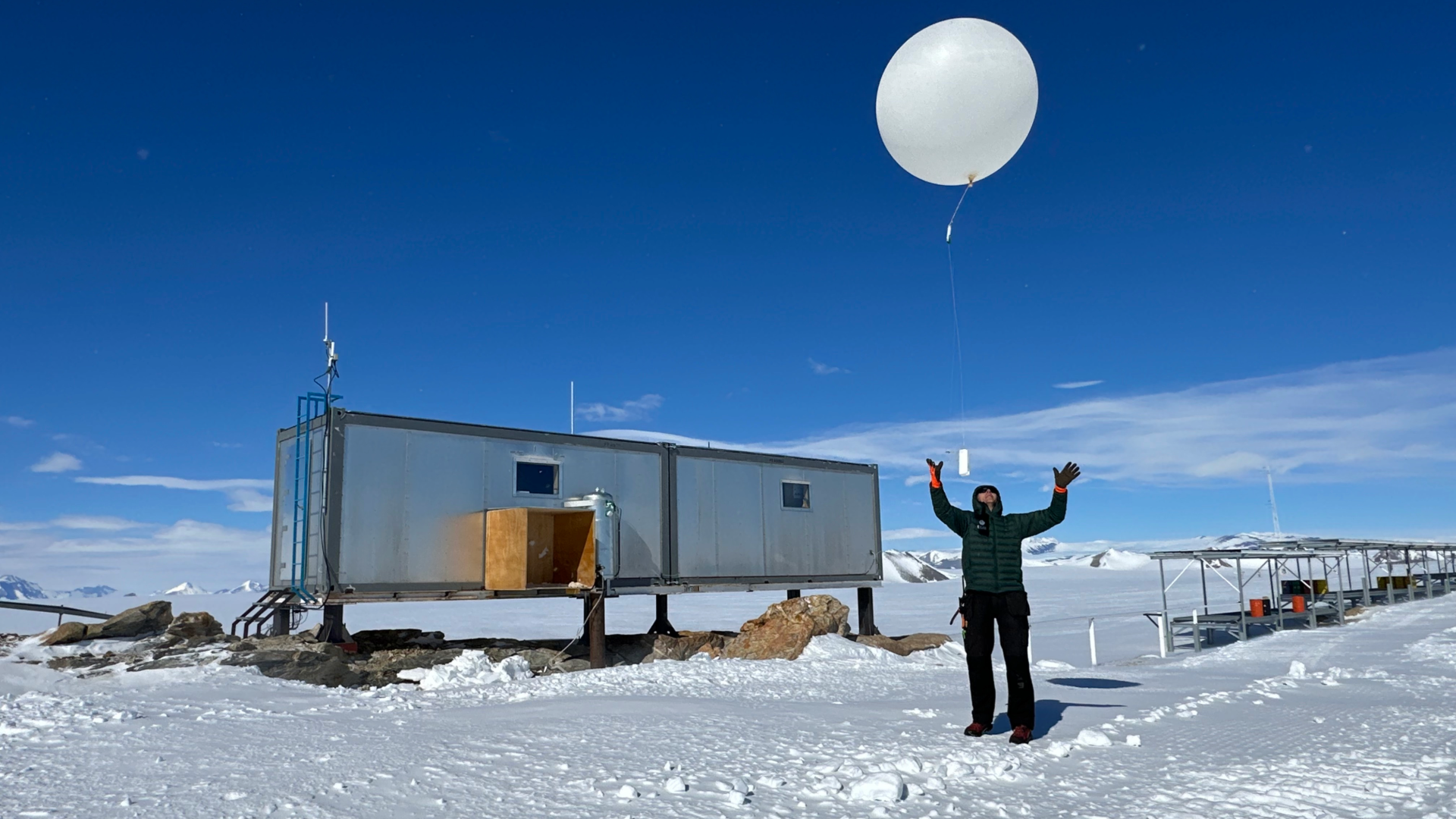
ACME focuses on monitoring the Antarctic atmosphere through regular radiosonde observations. Weather balloons equipped with meteorological instruments are launched from Princess Elisabeth Antarctica, collecting detailed measurements of temperature, humidity, air pressure, wind speed, and other atmospheric parameters as they ascend through the atmosphere. These observations provide valuable vertical profiles of the atmosphere that complement satellite observations and surface weather measurements.
The project's primary objective is to build a long-term record of high-quality atmospheric data. These measurements improve the understanding of weather and climate processes in Antarctica and provide essential input for regional and global climate models, weather forecasting, and polar research. All observations are harmonised according to World Meteorological Organization (WMO) standards and are shared with the international scientific community, contributing to global meteorological and climate monitoring initiatives.
Over the years, ACME has also expanded its observational capabilities through a network of Automatic Weather Stations (AWS) installed across East Antarctica. These stations continuously monitor local weather conditions throughout the year and transmit their data via satellite, providing researchers with valuable long-term observations from one of the most remote regions on Earth. Together with the radiosonde programme, this network strengthens the scientific understanding of Antarctic climate dynamics and supports ongoing international research into the changing polar environment.