


The Far-Reaching Legacy of Swiss Camp
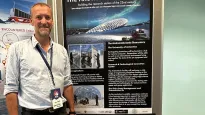
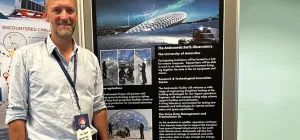
IPF's automatic weather station specialist Simon Steffen explains the legacy of Swiss Camp, which his father Dr. Konrad "Koni" Steffen established on the Greenland Ice Sheet in 1990, and his journey there this past summer to finish cleaning up the site.
IPF's automatic weather station specialist Simon Steffen explains the legacy of Swiss Camp, which his father Dr. Konrad "Koni" Steffen established on the Greenland Ice Sheet in 1990, and his journey there this past summer to finish cleaning up the site.
Tink, tink, tink: the soundtrack to cleaning up Swiss Camp, a remote research camp on the Greenland Ice Sheet.
My name is Simon Steffen and this summer I was a part of an international team that assembled in Ilulissat, Greenland to finish a job that started 36 years ago. It was my 11th time returning to Greenland, but only the second time without my father Dr. Konrad “Koni” Steffen. He had first ventured Arctic in 1976, returning every year, for 44 years in a row.
It had been years since anyone had set foot at this wandering site. Located at 69° north, at an elevation just north of 1,150 metres is the site that was commonly known as Swiss Camp. Surrounded by an ocean of fractured ice and creeping to the southwest at average of 30 cm per day. Swiss Camp was established in 1990 by my dad, a Swiss-American glaciologist, who at the time was working at the Swiss Federal Institute for Technology Zürich (ETHZ) before moving onto the University of Colorado, Boulder in 1991. In 2012 he returned to Switzerland to lead the Swiss Federal Institute for Forest, Snow and Landscape Research (WSL). Over all those years, one thing remained constant, his yearly trips to the Greenland Ice Sheet. Swiss Camp became a ground zero of sorts for climate change, attracting scientists, members of the media and politicians alike.
Swiss Camp also became the cornerstone of the Greenland Climate Network (GC-Net) a collection of automatic weather stations (AWS) that were dispersed and recording data continuously across the Greenland Ice Sheet beginning in 1990. By the mid to late 1990s, the GC-Net flashed the first warning signs of change and warming on the Greenland Ice Sheet – foreshadowing what was coming for the rest of the world. At the time climate change was only a blip on the radar for scientists. Not many people, experts included, believed Earth’s climate could react so quickly to anthropogenic forcing.
In 1990 Dr. Steffen chose the location of Swiss Camp because it represented the equilibrium line altitude (ELA), where the ice sheet was theoretically in balance, meaning the mass gained during winter equalled the loss during the summer months – leaving the surface height relatively constant.
However, by the mid to late 1990s it was clear that the ELA was moving to the northeast, taking the surface mass balance with it. There was a clear warming signal in the Arctic, captured by Dr. Konrad Steffen’s Greenland Climate Network. Large-scale melting and ice loss was happening on the Greenland Ice Sheet, including at the location of Swiss Camp, leaving the ice sheet, camp and scientists vulnerable to the change taking place across the region.
Over the years it almost became a game: would Swiss Camp survive one more year?
Throughout its existence, the foundation on which the Swiss Camp weather ports were perched melted away and collapsed multiple times. This is where the International Polar Foundation co-founders Alain Hubert and Nighat “Gigi” Amin Johnson come into the picture. They were both invited to Swiss Camp for the first time in 2011, which was the beginning of their fruitful relationship with Dr. Konrad Steffen and other members of his team. In May of 2012, they returned to participate in research on the ice sheet and to build what would ultimately be the final foundation for Swiss Camp.
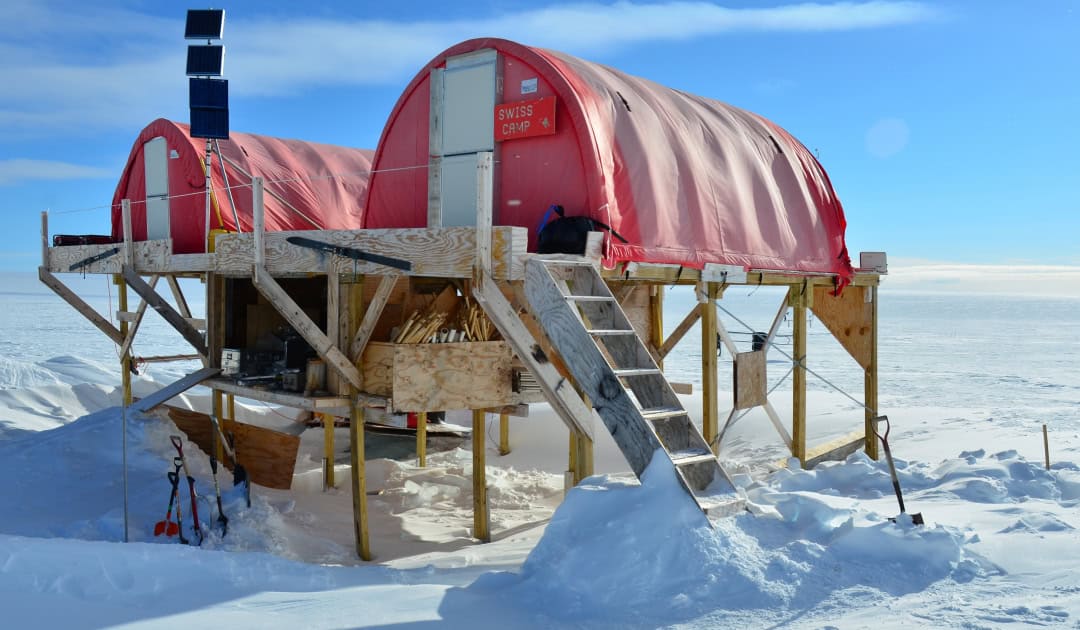
As luck - or climate change - would have it, the summer of 2012 happened to be an extreme melt year for the Greenland Ice Sheet. As a result, when the team returned to the site in May of 2013, they found a camp perched upon stilts. The newly built structure, red weather ports, snowmobiles and other material stored on the previously flush platform was suspended nearly two metres above the ice. This was the beginning of a decade-long trend. Swiss Camp continued to “grow” out of its surroundings, i.e. the ice sheet, which continued to melt year after year. It was a stark reminder: climate change was staring you straight in the face.
Over the subsequent years, the platform received upgrades and reinforcements to ensure that it could withstand its own weight and the katabatic winds blowing from the centre of the ice sheet that are ever-present in the winter.
In 2014, there was also a second floor (-1) added in the form of a “sealed” garage, which was about as airtight to the near-continuous blowing snow as an open car window during a snowstorm. Within a few short years the new garage had to be abandoned because the continued melt made it challenging to build a snow ramp large enough to smoothly discharge the snowmobiles and other equipment down onto the ice sheet.
in 2017 an open-air garage was added, floor (-2). This section was made to park the ever-trusty snowmobiles that withstood 50 weeks of isolation per year. To our awe, we would excavate these machines from their near snowy graves, chipping ice away from their frozen bodies and freeing the engine and drive belt of snow and ice before roaring their two-stroke engines back from the dead to support scientists on their mission. Fun was found in the struggle.
By 2019 the platform needed a fully extended ladder to be accessed, having “grown” five to six metres out of the ice in seven short years. The ice sheet, whose mass was once in balance at this location, was also showing obvious signs of stress and fatigue as the warmer climate had weakened the ice and allowed it to crack and shear in no uniform direction.
Swiss Camp succumbed to the melt and strong winds sometime before our next visit in the summer of 2020. When we arrived on site it looked almost as if a bomb had exploded: the skeleton of a weather port, tents no where to be found, wooden beams snapped and sticking up and out in random directions, bent metal poles strewn about and an assortment of items scattered and mostly refrozen back into the ice sheet. It was a sad site to behold.
2020 was also the last year Dr. Konrad Steffen would visit Swiss Camp. To this day, what happened remains a mystery, he vanished without a trace, to be with the ice for eternity. most likely into the icy depths of a water-filled crevasse that made up the northwest permitter of his once proud campsite.
What can be said is that Koni had just returned with Dr. Derek Houtz from the local AWS, which stood some150 metres away, with large crevasses separating the destroyed camp site and local weather station. The team was aware of the cracks and risk involved with the job; therefore, they had laid a fixed rope into which they could securely fasten their harnesses via belay. Upon their return, with his compact flash card in hand and eager to look at the data collected, Koni proudly announced to me and the others that he was “going to look at the data…”. Koni vanished with his data.
The measurements and his network of weather stations live on, collecting data to this day. It had been planned all along that the Geological Survey of Denmark (GEUS) would take over the Greenland Climate Network from Koni upon his retirement to ensure that the long time-series would carry on.
However, this would mark the conclusion of Swiss Camp, as GEUS was not interested in a semi-permanent camp that required attention and resources to keep operational year after year. Therefore, in the summer of 2021 the first cleanup operation of the site took place.
International Polar Foundation founders Alain Hubert and Gigi Amin were integral parts of the first cleanup effort along with Dr. Derek Houtz and myself. That year, much of the ground floor structure, remaining tents and the majority of equipment that had accumulated over 31 years was flown out to the closest town, Ilulissat, where the local community reused and recycled almost everything. The team in 2021 experienced a two-day weather delay, and nearly impossible working conditions on the ice sheet due to the fact that it was an extremely wet summer that year. It was as if the camp was unwilling to give up its hold on the ice sheet.
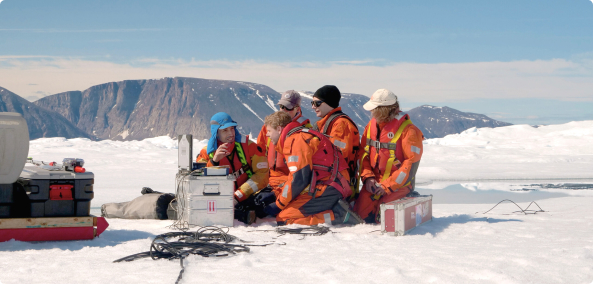
This past summer WSL, the institute Dr. Steffen led at the time of his passing, funded a second cleanup effort of Swiss Camp to ensure that the Ice Sheet would be left as found 36 years ago. This time Greenland Guidance coordinated the effort to extract as much material as possible over a five-day period.
While the working conditions this time were more favourable, the mission was still challenging. You can easily forget the shear strength and grip that frozen water displays until you're standing there with an ice tool in your hands, exhausted, and the damn thing hasn’t budged a millimetre. Tink, tink, tink. The work continues.
After another five days of hard work, countless slips, falls and helicopter sling loads, we managed to extract nearly 10,000 kg of material in one form or another from the Greenland Ice Sheet. Just a few plywood boards and two-by-four beams that made up the midsection of the platform remain trapped in the ice. The ice sheet was unwilling to relinquish the last scraps of the camp, which are now neatly nestled between two large crevasses.
At Swiss Camp many of the bonds between ice and material things were broken. However, just like past years, new bonds between human beings were formed, and these are everlasting. The camp was destroyed by the moving, melting ice and relentless winds, most everything has been removed from the site but the story of Swiss Camp lives on.
36 years and counting...
Download