

The Andromeda Earth Observatory
Research station of the 22nd century: science, innovation and climate solutions
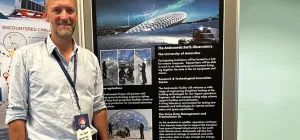
The Andromeda Earth Observatory is an ambitious international project led by the International Polar Foundation (IPF). It aims to build a new-generation research station in Antarctica, designed not only to advance scientific knowledge, but also to develop practical solutions for a changing world.
Building on more than 15 years of experience operating the Princess Elisabeth Antarctica station, the world’s first zero-emission polar research station, Andromeda represents the next step: a platform that brings together science, technology and sustainability in one integrated ecosystem.
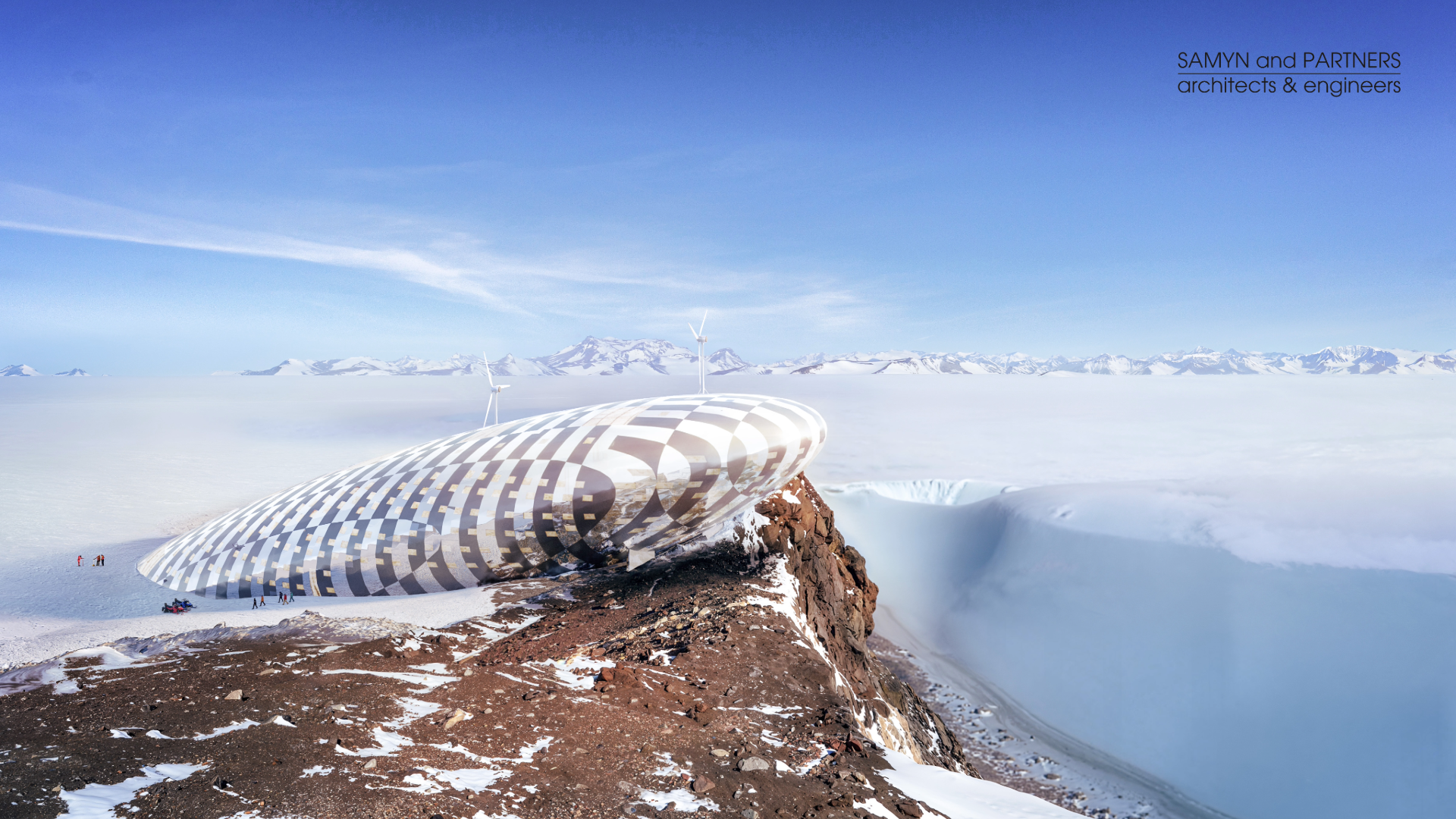
Andromeda Earth Observatory image designed by ©SAMYN and PARTNERS architects & engineers
Latest News

A station designed for the future
Located in one of the most extreme environments on Earth, the Andromeda station will be conceived as a zero-emission, energy-efficient and circular infrastructure. It will operate using renewable energy systems and advanced technologies to minimize environmental impact while enabling cutting-edge research.
But Andromeda is more than a research base — it is a “living laboratory”, where solutions are tested in real conditions before being adapted and applied elsewhere in the world. These include:
- Renewable energy systems and smart grids
- Closed-loop water and waste management
- Autonomous and remote technologies
- Advanced materials and sustainable construction
- Data and communication infrastructures
The lessons learned in Antarctica can help address challenges in Europe and beyond, particularly in regions facing climate stress.
Three pillars, one integrated platform
The Andromeda Earth Observatory is built around three complementary components:
The ANTARCTIC UNIVERSITY CAMPUS HUB (AUCH)
A Hub for international collaboration between Universities working in polar research, education and training – Addressing the need for new platforms for collaborative research using modern technical solutions for collecting data and reducing the impact of creating separate infrastructure for multiple actors.
The CASSIOPEIA RESEARCH & TECHNOLOGICAL DEVELOPMENT FACILITY (CARTDF)
Enabling applied research, testing and validation of sustainable technologies for extreme environments, including renewable energy, robotics, life support systems and low-impact infrastructure.
The SIRIUS ZERO EMISSIONS TELEPORT (SIZET)
Supporting secure satellite data storage, near real-time Earth observation and resilient space communication services powered by sustainable energy. Together, these capabilities create a flexible and future-oriented ecosystem advancing autonomy, data repatriation and next-generation space technologies.
A truly international initiative
Andromeda is designed as a global collaborative project, bringing together:
- Leading scientists from multiple disciplines
- Universities and research institutes worldwide
- Industrial partners and technology leaders
- Governments and international institutions
This collaboration reflects the spirit of the Antarctic Treaty — promoting peaceful cooperation, scientific excellence and environmental responsibility across borders.
Bridging science, innovation and society
Beyond its scientific mission, Andromeda aims to connect research, industry, policy and finance. By doing so, it creates new pathways to develop and scale solutions that contribute to:
- Climate action and environmental protection
- Sustainable infrastructure
- Technological innovation
- Economic and societal resilience
It is a platform where ideas can move from research to real-world impact.
A long-term vision
The Andromeda Earth Observatory is being developed with a long-term perspective and is expected to become operational around the next International Polar Year (2032–2033).
As a next-generation Antarctic station, it represents not only a leap forward in polar research, but also a concrete step toward building a more sustainable and resilient future.
Andromeda Earth Observatory image designed by ©SAMYN and PARTNERS architects & engineers