


BIRA
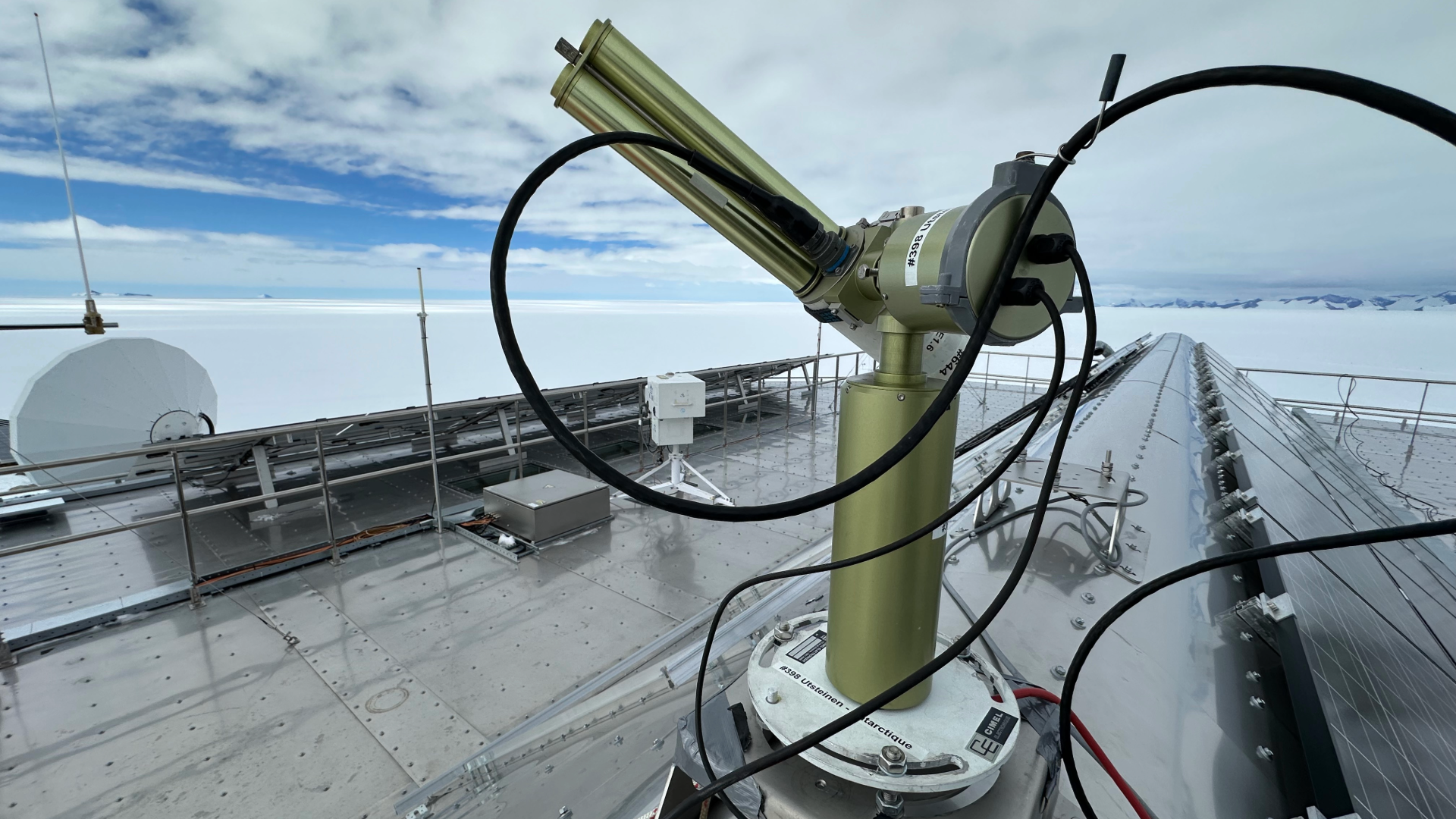
The BIRA (CLIMB 2.0) project monitors the composition of the Antarctic atmosphere using a suite of ground-based atmospheric observation instruments installed at Princess Elisabeth Antarctica. Led by the Royal Belgian Institute for Space Aeronomy (BIRA-IASB), the project has been collecting long-term atmospheric observations since 2009.
The project combines measurements from a CIMEL sunphotometer and a MAXDOAS (Multi-Axis Differential Optical Absorption Spectroscopy) instrument. Together, these instruments measure atmospheric aerosols and trace gases, including ozone and nitrogen dioxide, while also providing information on atmospheric water vapour and other key optical properties of the atmosphere.
The CIMEL sunphotometer measures direct sunlight and diffuse sky radiation at multiple wavelengths to determine the Aerosol Optical Depth (AOD), an important indicator of the amount of airborne particles present in the atmosphere. Additional parameters, including precipitable water vapour, aerosol size distribution and scattering properties, help scientists better understand the role of aerosols in Earth's climate system.
The long-term observations collected at Princess Elisabeth Antarctica contribute to international atmospheric monitoring efforts and provide valuable reference data from one of the cleanest environments on Earth. These measurements improve our understanding of atmospheric composition, climate processes and the influence of aerosols on the Antarctic environment.