



COGNIPOLE
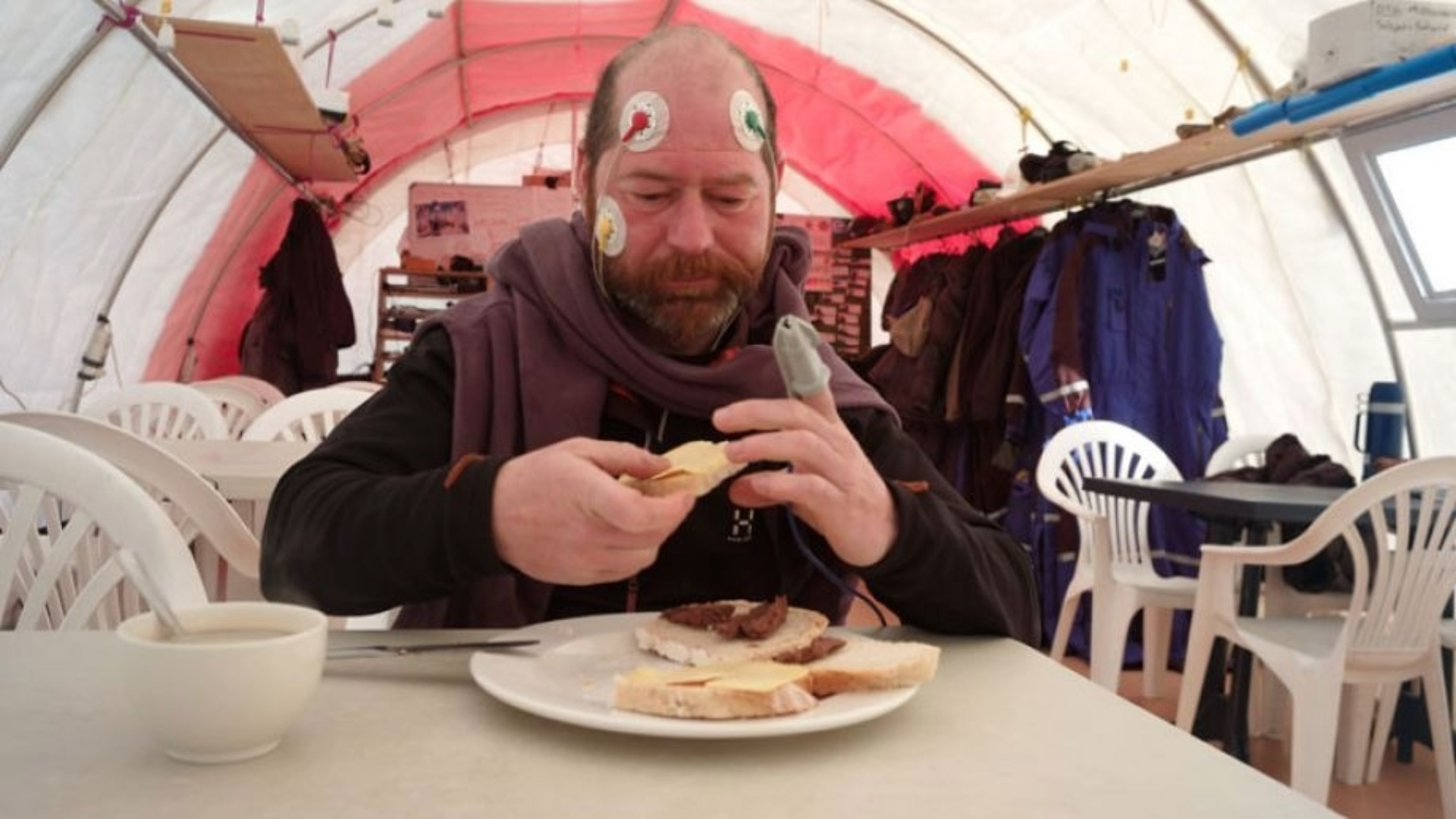
Doctor of Medecine Nathalie Pattyn from the Vrije Universiteit Brussel (VUB) accompanied the construction teams that went to Antarctica during the two seasons in which the Princess Elisabeth Antarctica was being built in order to observe how physical activity can help regulate sleep disturbances people may experience when living in an environment of constant daylight.
The study was done on 21 healthy male subjects between the ages of 27 and 57, free of medication. Data collection began after a three-week acclimatisation period to the Antarctic environment. An 18-h profile (saliva sampling every 2 h) of cortisol and melatonin was assessed. Mood, sleepiness, and subjective sleep quality were assessed, and the psychomotor vigilance task was administered. PSG showed, in addition to high sleep fragmentation, a major decrease in slow-wave sleep (SWS) and an increase in stage R sleep. Furthermore, the ultradian rhythmicity of sleep was altered, with SWS occurring mainly at the end of the night and stage R sleep at the beginning. Cortisol secretion profiles were normal; melatonin secretion, however, showed a severe phase delay. There were no mood alterations according to the Profile of Mood States scores, but the psychomotor vigilance test showed an impaired vigilance performance. These results confirm previous reports on “polar insomnia”, the decrease in SWS, and present novel insight, the disturbed ultradian sleep structure. A hypothesis is formulated linking the prolonged SWS latency to the phase delay in melatonin.
On the night of their recording, participants would come to the surgery to be kitted out and fill in the questionnaires. This would occur right before retreating to their individual tents to go to bed, which was always between 2230 and 2330. The morning after, they would again come to the surgery to be kitted out, then they had the opportunity to get changed and visit the sanitary container, then they came back to fill in the questionnaires and perform the psychomotor vigilance task (which would take place 45 min after waking up). The morning session always occurred between 0700 and 0730. These timings were followed by the whole crew, as the daily life followed a regular schedule with regard to working hours and meal times, apart from Saturday night and Sundays, which were the rest periods. For these reasons, no PSG was conducted on these days/nights.
In summary, from the data she collected during these two seasons from volunteers working on building the station, she was able to determine that the quality of one's sleep is directly influenced by the physical activity each person engages in during the day.