


JARE
The Japanese Antarctic Research Expedition (JARE) brings together several Japanese governmental research agencies conducting scientific research in Antarctica. At Princess Elisabeth Antarctica, JARE supports long-term geophysical observations that improve our understanding of the Earth's gravity field, crustal movement and magnetic environment.
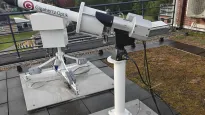
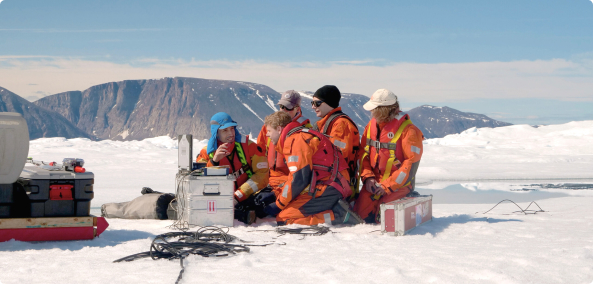
One component of the project focuses on Glacial Isostatic Adjustment (GIA), the gradual movement of the Earth's crust following changes in the weight of the Antarctic Ice Sheet. By combining absolute gravity measurements with Global Navigation Satellite System (GNSS) observations, researchers investigate changes in gravity and crustal displacement associated with both long-term geological processes and present-day changes in ice-sheet mass.
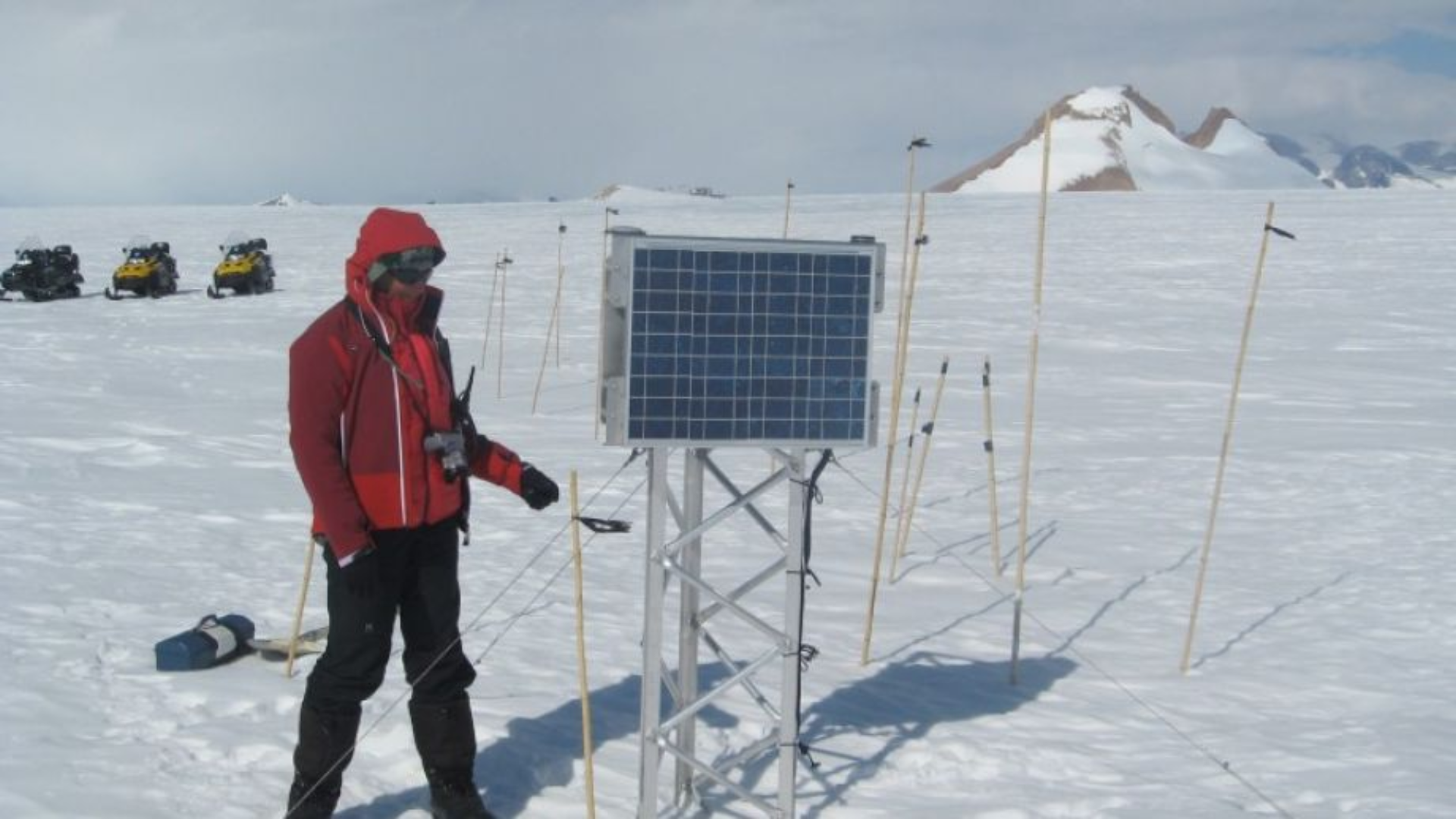
A second component contributes to an international network of unmanned magnetometers operating across Antarctica. Installed near Utsteinen in collaboration between Belgium and Japan, the magnetometer continuously measures variations in Earth's magnetic field, including ionospheric currents and geomagnetic pulsations associated with auroral activity. These observations provide valuable data for studying the Antarctic magnetic environment and complement similar measurements collected across the continent.
Together, these long-term observations contribute to a better understanding of Antarctica's geophysical processes and support international research into the Earth's gravity and magnetic fields.