


REMACA
The REMACA (Radiocarbon Estimates of Microbial Activity and Carbon Accumulation) project studied microbial activity and carbon accumulation in the environment in the vicinity of the Princess Elisabeth Antarctica Station.
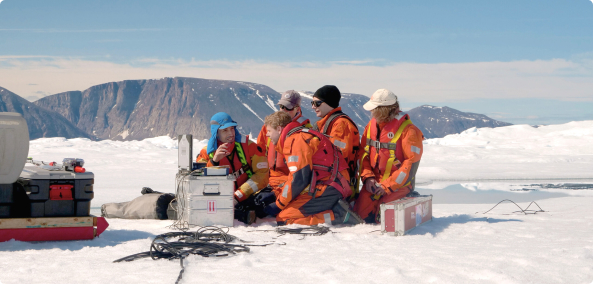
Funded under the 2016 Baillet-Latour Antarctic Fellowship, field work for the project was carried out by Dr Lori Ziolkowski from the University of South Carolina, Dr Stefanie Lutz and Professor Liane Benning from the Deutsche Geoforschungszentrum in Potsdam and Dr Janine McCutcheon from the University of Leeds. They travelled to the Princess Elizabeth Antarctic Research Station (PEA) during the 2016-17 and 2017-18 research seasons to discover what types of microbial life forms live around PEA and how active this life is. Previous studies had found ample evidence of microbial life on rocks, in the rocks, in ice-covered lakes and in the soil. But it remained unclear how active these microbes are. The climate of East Antarctica is harsh and these conditions are known to limit microbial activity elsewhere, as in the High Arctic.
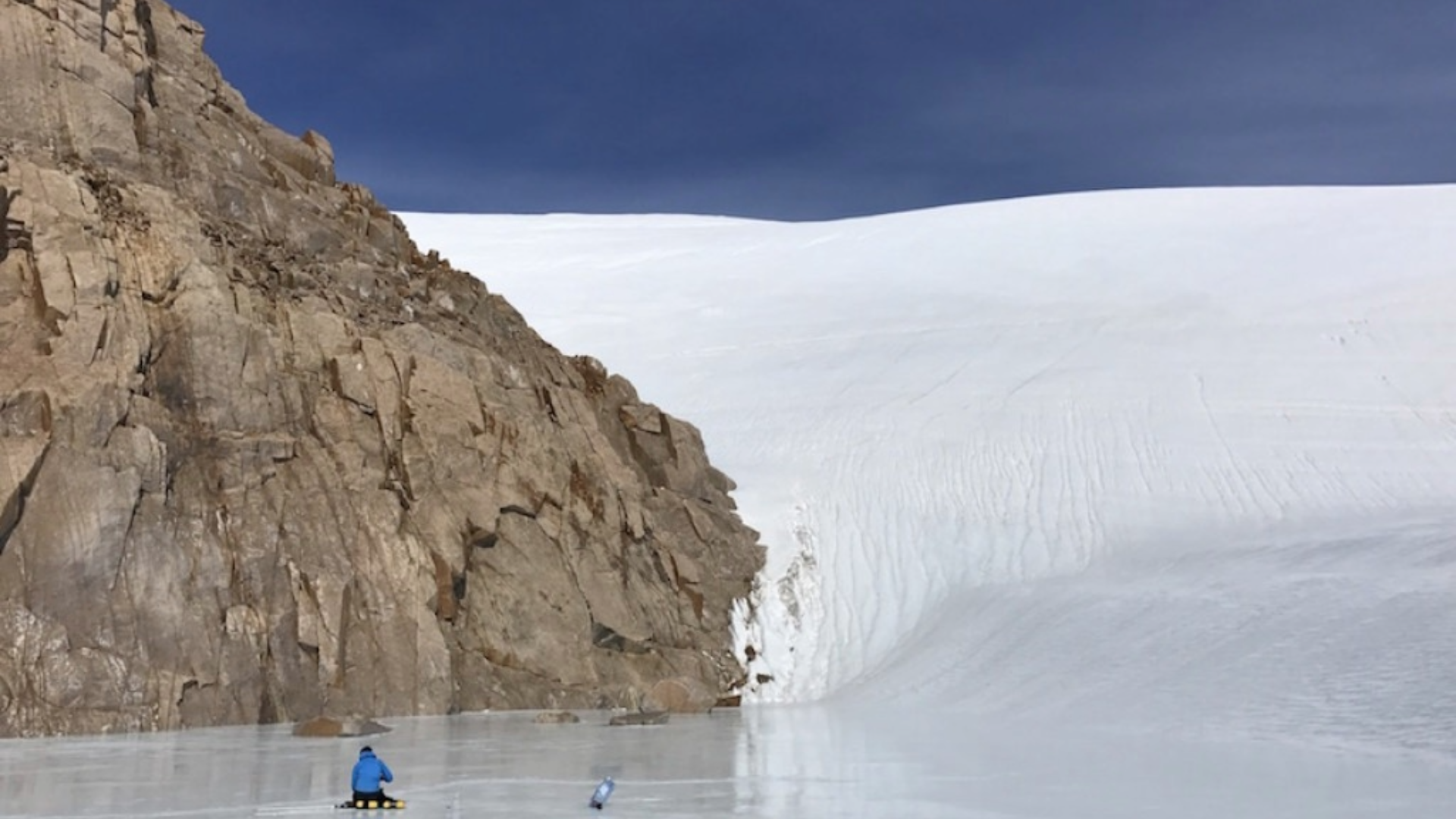
But to the great surprise of Lori and Steffi, microbial life can be found almost everywhere around PEA. By the end of their field trips, they had collected samples from soils, rocks, ice, and even lakes. Most lakes around PEA are covered with a metre of ice because air temperatures never rise above freezing, so it was surprising to find one lake partially ice-free. In this open water lake, they found macroalgae, which is similar to seaweed, and green cyanobacteria mats.
The most hospitable place for a microbe trying to survive in Antarctica’s harsh environment is actually inside the rock, which are known as endoliths. When a rock is broken into pieces, one can typically see a line of green pigment, which is where microbes have been harnessing the sun's energy through photosynthesis. Scientists often study endoliths because they give us clues as to where life on other planets like Mars may exist. Endoliths were found in most rocks near PEA.
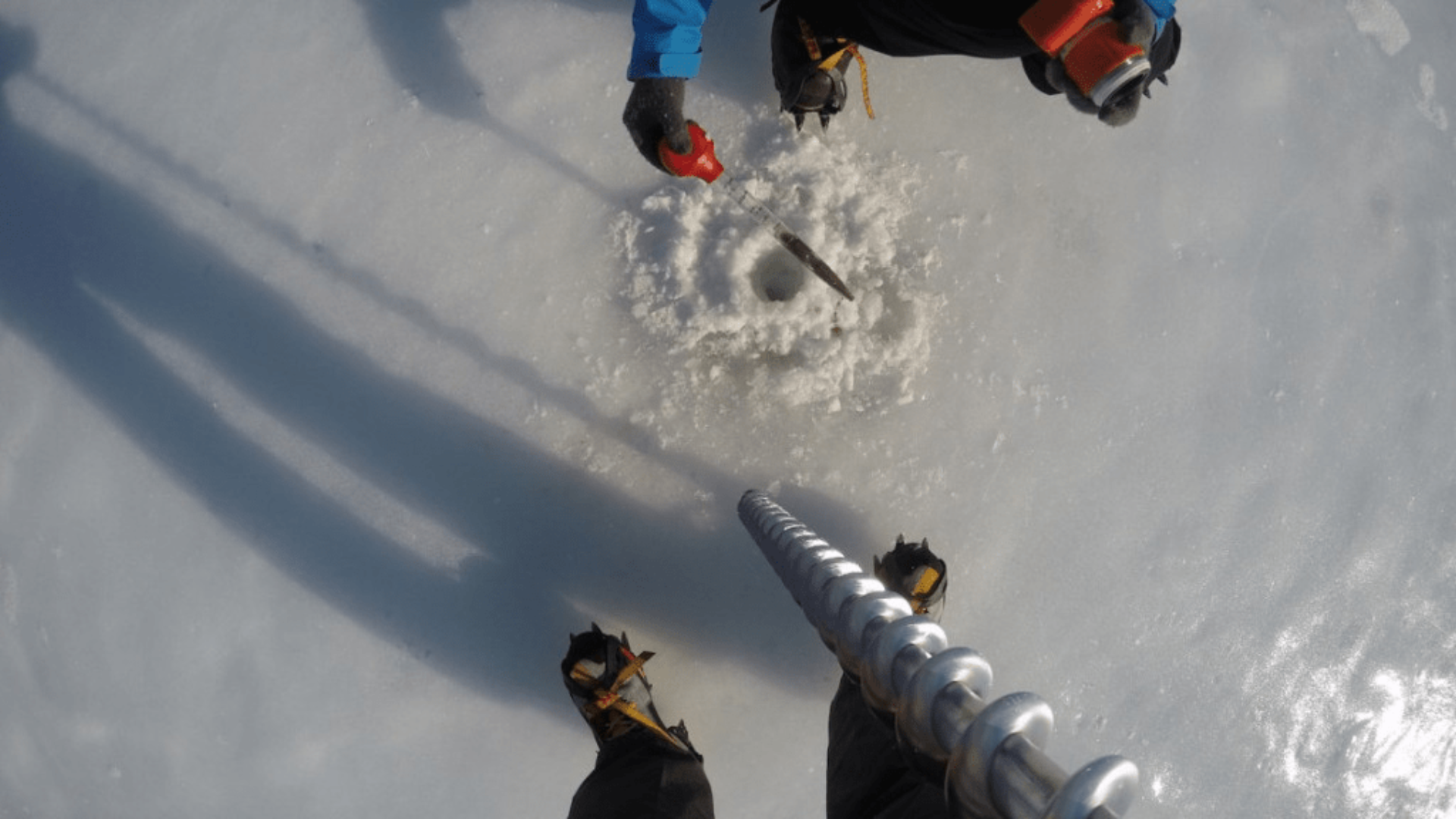
Much of the fieldwork was also focused on studying cryoconites. Cryoconite holes are circular holes in glacier ice. Microbes find these holes a hospitable place to live because they often contain melted water. In the Arctic, Lori and Steffi had studied and found cryoconites that are open to the atmosphere and have no ice cover. Typically, in Antarctica the cryoconite holes are ice covered; those around PEA were usually covered with 8-10 cm of ice. They collected multiple cryoconite samples from many locations around PEA to determine local and regional variability in the composition of the material within these cryoconite holes.
Upon their return home the researchers studied their samples to find out which organisms are living in these samples and how active these microbes are.