


AURORA
The AURORA project investigates the spectacular light displays of the Aurora Australis (Southern Lights) to better understand the complex interactions between the Sun and Earth's magnetic environment. Led by the Japanese National Institute of Polar Research (NIPR), the project forms part of an international observation network extending along the coast of Queen Maud Land in East Antarctica.
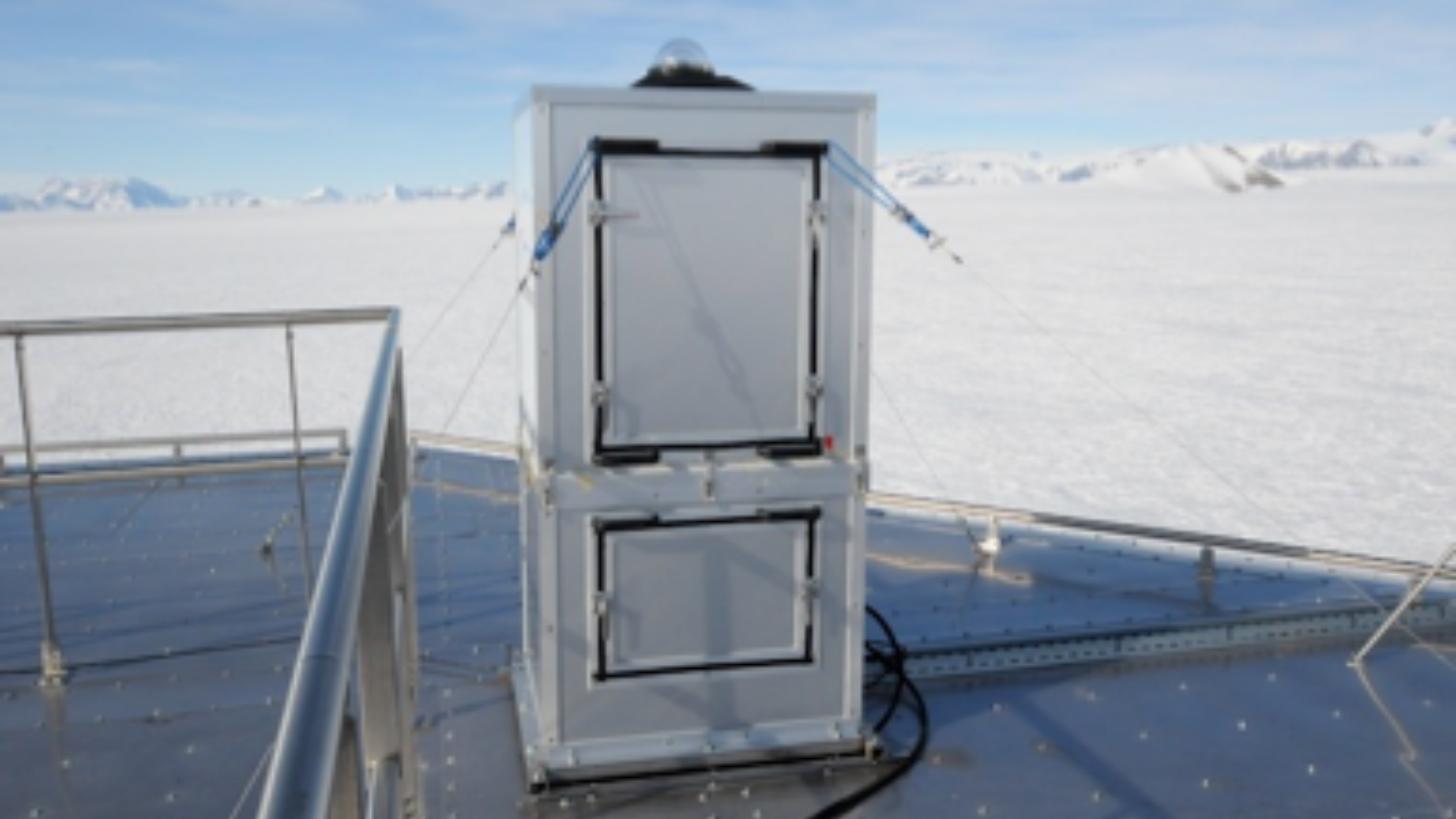
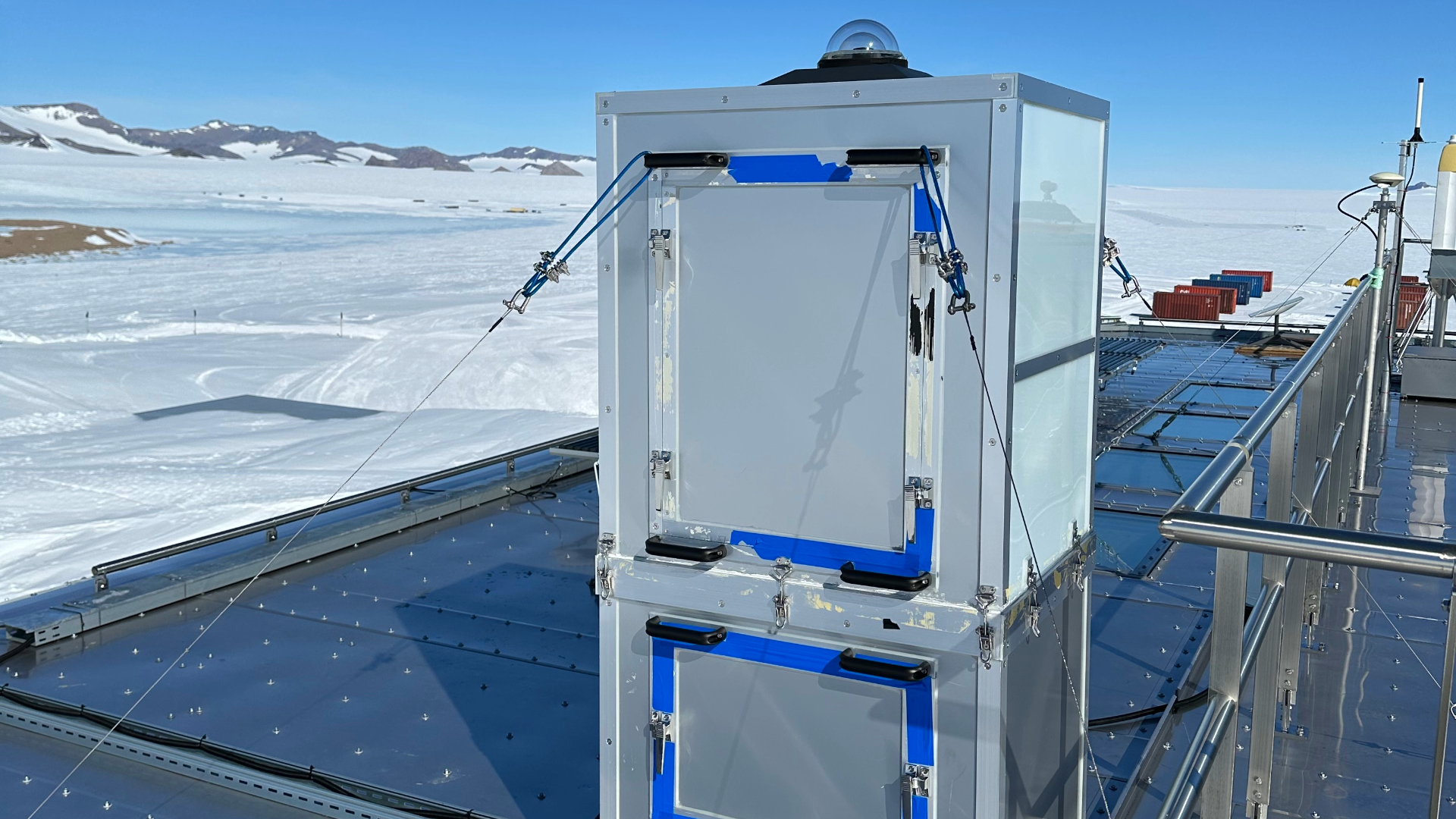
Since 2020, Princess Elisabeth Antarctica has hosted an Unmanned Auroral Observatory (UAO) equipped with an aurora camera, a fluxgate magnetometer and a Global Navigation Satellite System (GNSS) antenna. Together, these instruments continuously monitor auroral activity and changes in Earth's magnetic field, providing year-round observations from one of the world's most favourable locations for studying the Southern Lights.
The project focuses on understanding how auroras develop over time and across large areas of the sky. Researchers investigate the physical processes behind auroral storms and substorms, including the interactions between charged particles from the Sun and Earth's magnetic field. These observations help scientists better understand the fundamental processes that drive space weather.
As part of an international network of Antarctic observatories, AURORA contributes valuable data to global research on the Earth's magnetosphere and its response to solar activity. The long-term observations improve scientific knowledge of near-Earth space and help advance our understanding of the dynamic relationship between the Sun and our planet.