


GEOMAG
GEOMAG is a long-term geophysical monitoring project led by the Royal Meteorological Institute of Belgium (RMI/IRM/KMI). The project continuously measures Earth's geomagnetic field from Princess Elisabeth Antarctica, providing valuable observations from one of the few geomagnetic observatories operating in the polar regions.
Earth's magnetic field is constantly changing due to processes occurring deep within the planet's core and through interactions with charged particles emitted by the Sun. Monitoring these changes is essential for understanding the evolution of Earth's magnetic field, improving models of the planet's interior and studying the effects of space weather. Because permanent geomagnetic observatories are sparse across Antarctica, measurements from Princess Elisabeth Antarctica provide an important contribution to the global observation network.
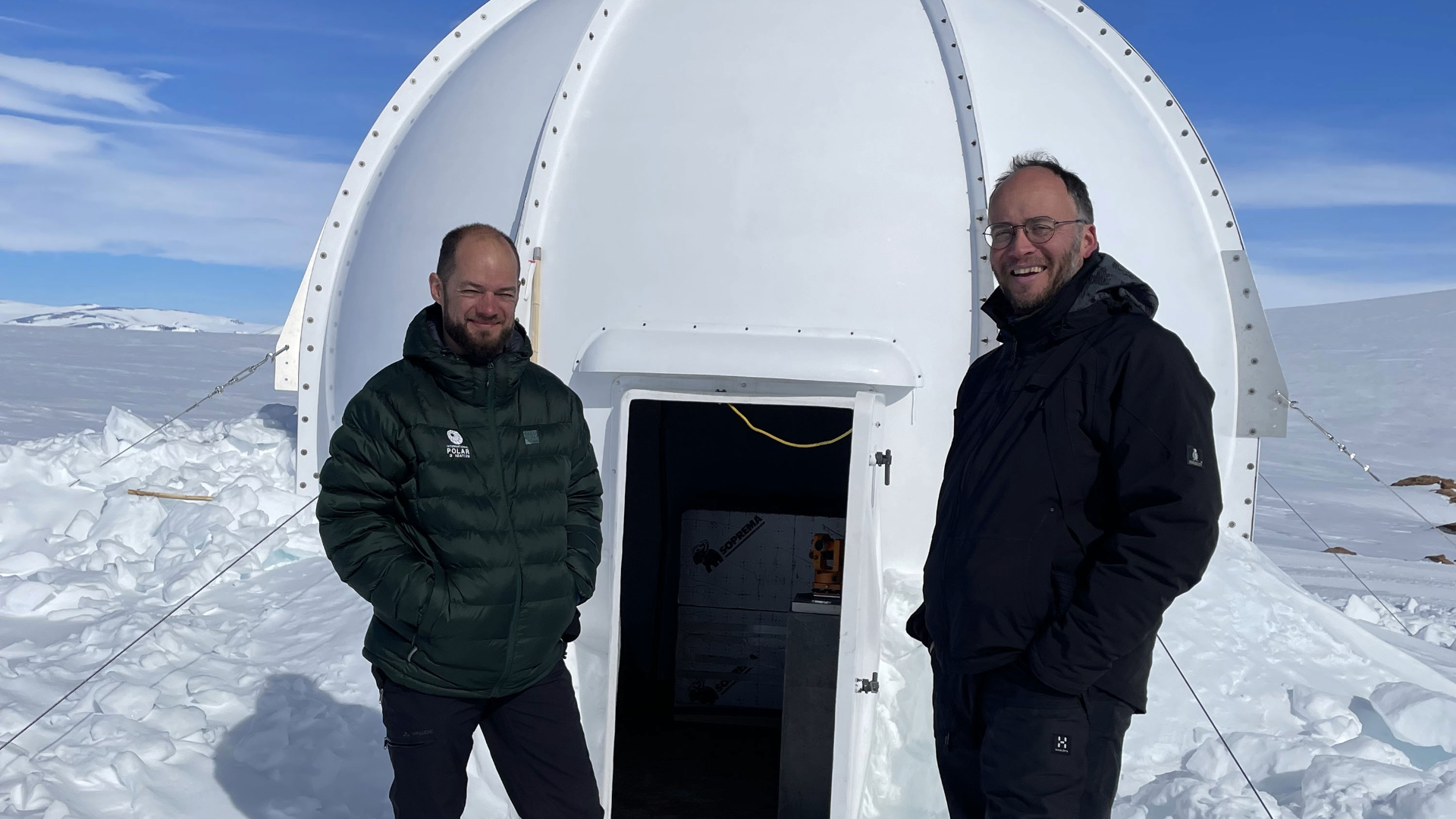
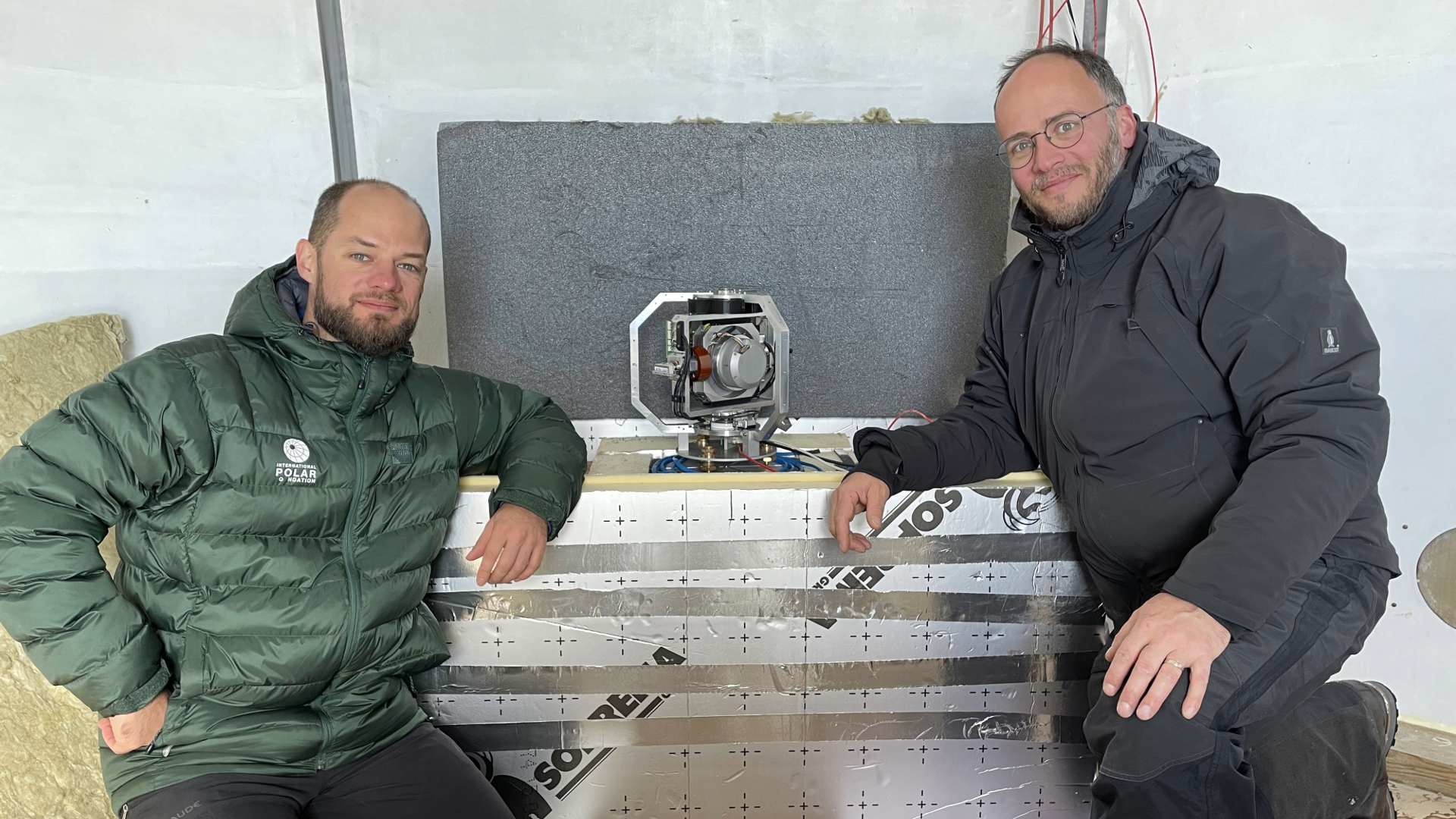
The observatory is located in a specially designed non-magnetic shelter near Utsteinen Ridge to eliminate magnetic interference from the research station. It is equipped with high-precision instruments, including an automated non-magnetic theodolite (Autodif), a proton Overhauser magnetometer and a triaxial variometer. Together, these instruments continuously record the strength and direction of Earth's magnetic field throughout the year, including during the Antarctic winter when no scientists are present.
The observations collected by GEOMAG follow international INTERMAGNET standards and contribute to international geomagnetic research, including the European Space Agency's Swarm satellite mission. By combining ground-based observations with satellite measurements, the project helps scientists better understand Earth's magnetic environment and supports research in geophysics, navigation and space weather.